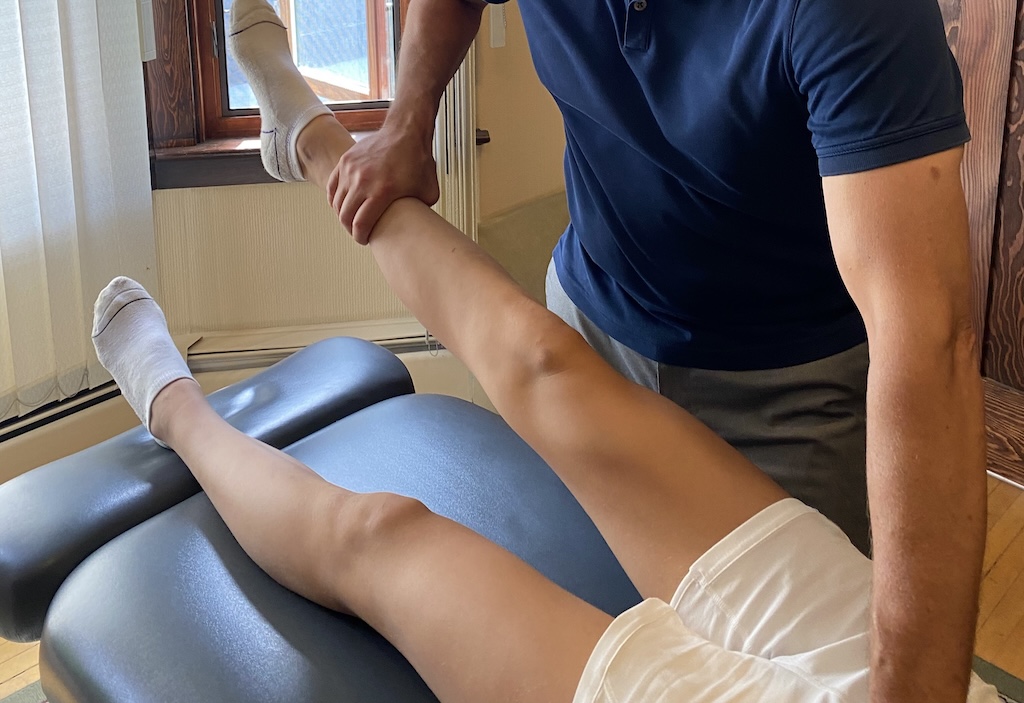
Dr. Dean Collins is an experienced Edmonton chiropractor helping athletes and active adults and kids recover from sports injuries, restore movement, and return to the activities they enjoy. With over 30 years of clinical experience, he provides personalized chiropractic care and rehabilitation for both acute injuries and problems that develop gradually from training, repetitive activity, or overuse.
Whether you run, golf, play hockey, work out at the gym, participate in recreational sports, or simply want to stay active, treatment is tailored to your injury, activity level, and goals.
Personalized sports injury treatment to reduce pain, restore movement, increase strength, and help you get back to doing what you enjoy.
Get Back to the Activities You Enjoy
Sports injuries don’t only happen to competitive athletes. You can hurt your back playing golf, develop knee pain while running, strain a shoulder at the gym, or repeatedly roll an ankle playing recreational sports.
Some injuries happen suddenly. Others develop gradually as repeated stress exceeds your body’s ability to recover.
At Collins Chiropractic Health & Wellness Centre, our sports injury treatment in Edmonton begins by determining what has been injured and identifying factors that may be contributing to the problem.
Rather than focusing only on where it hurts, we consider joint movement, nerve and muscle function, strength, flexibility, balance, biomechanics, training demands, and other areas of the body that may be affecting your recovery.
The goal is not simply to feel better. It’s to help you move and function well enough to confidently return to the activities that matter to you.
Contact us today!
Common Sports Injuries We Treat
Sports and recreational injuries can affect nerves, muscles, joints, tendons, ligaments, and other tissues throughout the body.
Common problems we assess and treat include:
- Back and neck injuries
- Muscle strains and joint sprains
- Shoulder pain and rotator cuff problems
- Hip and groin pain
- Knee pain
- Runner’s knee and other overuse problems
- Foot and ankle pain
- Ankle sprains and instability
- Achilles and calf problems
- Tennis and golfer’s elbow
- Repetitive strain and overuse injuries
- Running-related injuries
- Golf-related injuries
- Gym and weight-training injuries
- Reduced mobility following an injury
Some sports injuries require imaging, medical assessment, or treatment from another healthcare provider. If your examination suggests that chiropractic treatment isn’t appropriate or further investigation is needed, we’ll discuss that with you and recommend the appropriate next step.
Learn More About Sports Injuries
Want to learn more about common sports injuries, symptoms, and recovery? Explore these helpful articles:
- Why Does My Knee Hurt When I Walk?
- Prevent Back Pain Before Golf Season: Chiropractic Tips for Edmonton Golfers
- Sports Injuries in Children and Teens: When to See a Chiropractor
- Why Does My Knee Hurt Going Up or Down Stairs?
- Chiropractic Care for Knee Pain: Effective Treatment and Lasting Relief
- Chiropractic Care for Ankle Sprains: Effective Treatment and Recovery
- Why Does My Shoulder Hurt When I Lift My Arm?
- Do I Have a Rotator Cuff Injury or a Shoulder Muscle Strain? How to Tell the Difference
- Why Shoulder Pain Often Starts in the Neck or Upper Back (Not Just the Shoulder)
- Why Does My Hip Hurt When I Walk?
- Is Your Hip Pain Actually Coming From Your Low Back?
- Chiropractic Improves Sports Performance
- Pinched Nerves Cause Weak Legs
- When Should You See a Chiropractor for a Sports Injury?
- Why Does My Back Hurt After Golf?
- Why Does My Knee Hurt When I Run?
- Why Does My Shoulder Hurt After Working Out?
- Why Does My Lower Back Hurt After Working Out?
Why Do Sports Injuries Happen?
Sometimes the reason is obvious. You twist an ankle, fall while skiing, get hit playing hockey, or feel something pull while lifting a weight.
However, many sports injuries don’t begin with one dramatic event.
Running, throwing, swinging a golf club, skating, jumping, and strength training all place repeated demands on the body. Normally, your tissues adapt to those demands. Problems can develop when the amount or intensity of activity increases faster than your body can comfortably accommodate.
Several factors may contribute, including:
- A sudden increase in training volume or intensity
- Repetitive movements
- Inadequate recovery
- Previous injuries
- Reduced joint mobility
- Muscle weakness or imbalance
- Poor movement control
- Limited flexibility
- Changes in footwear or equipment
- Returning to activity too quickly after an injury
Identifying these factors can be an important part of both recovery and reducing the likelihood that the same problem keeps returning.
How Chiropractic Sports Injury Treatment Helps Edmonton Patients
Effective sports injury treatment should begin with a proper assessment.
Dr. Collins will discuss how the injury happened, what activities aggravate it, what you can and cannot currently do, and what you want to return to. Your examination may assess joint movement, nerve and muscle function, strength, flexibility, balance, neurological function, and movement patterns relevant to your injury.
Depending on your examination findings, treatment may include:
- Chiropractic adjustments and joint mobilization
- Soft tissue therapy
- Mobility and flexibility exercises
- Progressive strengthening
- Balance and stability exercises
- Rehabilitation exercises
- Movement and technique recommendations
- Training or activity modifications
- Home exercises and self-care strategies
- Advice for gradually returning to activity
Treatment isn’t identical for every sports injury. A runner with knee pain has different physical demands from a golfer with back pain or someone recovering from an ankle sprain.
Your treatment plan should reflect those differences.
Exercise and rehabilitation are particularly important when returning to activity. Restoring mobility, strength, balance, and movement control can help prepare the injured area for progressively greater demands as recovery occurs.
Sports Injury Treatment Isn’t Just for Competitive Athletes
You don’t have to compete at an elite level to benefit from sports injury treatment.
Many of our patients simply want to remain active.
You might be a recreational runner training for your first 10K, a golfer who wants to play without back pain, a parent playing recreational hockey, or someone who enjoys strength training several times a week.
You may not even consider yourself an athlete.
If an injury is preventing you from exercising or participating comfortably in an activity you enjoy, the underlying goals are much the same: determine what’s wrong, restore normal function, rebuild your capacity, and help you return to activity safely.
At our Edmonton clinic, we work with people of different ages, fitness levels, and athletic backgrounds. Your treatment is based on what you need your body to do.
Acute Injuries and Overuse Injuries
Sports injuries generally develop in one of two ways.
Acute Sports Injuries
An acute injury happens suddenly. Examples include rolling an ankle, straining a muscle while sprinting, falling onto a shoulder, or developing sudden back pain while lifting.
Pain, swelling, reduced movement, bruising, or difficulty putting weight through an injured area may occur.
The first priority is determining the nature and severity of the injury. Some acute injuries can be managed conservatively, while suspected fractures, significant ligament injuries, dislocations, concussions, or other serious injuries require appropriate medical assessment.
Overuse Injuries
Overuse injuries develop more gradually.
You might notice a mild ache after running that becomes more persistent, shoulder pain that develops after repeated workouts, or elbow discomfort that progressively interferes with golf or racquet sports.
These problems often reflect a combination of repeated loading and insufficient recovery or adaptation.
Simply resting until the pain disappears may not address why the problem developed. Assessment can help identify mobility, strength, training, or movement factors that may need to be addressed before you fully return to activity.
Returning to Sport, Activity & Performance
Recovering from a sports injury isn’t only about reducing pain. It’s also about restoring the movement, strength, confidence, and physical function you need to return to the activities you enjoy.
Depending on your injury and goals, rehabilitation may focus on improving:
- Joint mobility and range of motion
- Strength and muscular control
- Flexibility
- Balance and coordination
- Stability and movement control
- Sport – or activity-specific movement
- Confidence in the injured area
For a runner, that might mean gradually returning to comfortable running without recurring knee or foot pain. For a golfer, it could involve restoring hip, back, or shoulder mobility so the body can move more comfortably through the swing. For someone who enjoys the gym, the goal may be returning to lifting with good movement and appropriate loading.
We also consider how different parts of the body work together. Limitations in mobility, strength, balance, or coordination in one area can sometimes affect movement elsewhere, particularly during repetitive or demanding activities.
As symptoms improve, your treatment and rehabilitation can progress from reducing pain and restoring basic movement toward rebuilding the function required for your sport or activity.
The goal is to help you return to activity safely and confidently—and to help your body function as well as possible once you’re back doing what you enjoy.
What to Expect During Your First Visit
Your first visit begins with a detailed history.
We’ll discuss your injury, when it began, how it affects your activities, previous injuries, your training or exercise routine, and what you hope to accomplish with treatment.
Dr. Collins will then perform an examination appropriate for your condition. This may include assessment of:
- Range of motion
- Joint function
- Muscle strength
- Flexibility
- Balance and stability
- Nerve function
- Movement patterns
- Relevant areas above and below the injury
For example, knee pain may require looking at the spine, hip, ankle, and foot as well as the knee itself. Shoulder problems may involve assessing the shoulder blade, upper back, and neck.
Once we understand the problem, we’ll explain the findings and discuss your treatment options.
If further investigation or referral is appropriate, we’ll let you know.
Personalized Care for Edmonton Athletes & Active Adults
There is no single treatment program that works for every sports injury.
Your age, injury, health, activity, training history, physical findings, and goals all matter.
With more than 30 years of clinical experience, Dr. Collins combines hands-on chiropractic care with exercise, rehabilitation, and practical advice to help patients recover and remain active.
Our goal is straightforward: help you move better, recover confidently, and get back to the activities you enjoy.
Trust & Experience
- Over 30 years of chiropractic experience
- Chiropractic care for children, teens and adult athletes
- Experienced treating sports injuries and active adults
- Chiropractic care for spinal and extremity conditions
- Personalized, age-appropriate treatment based on individual needs and goals
- Rehabilitation and exercise recommendations when appropriate
- Care for recreational athletes, competitive athletes and active families
Dr. Dean Collins has been helping Edmonton patients of all ages recover from pain and injury and improve their physical function for more than 30 years. His approach combines hands-on chiropractic care with an understanding of movement, exercise, nerve and muscle function and the demands that sports and an active lifestyle place on the body.
Learn more about Dr. Collins and his approach.
Frequently Asked Questions
Chiropractors commonly assess and treat neuromusculoskeletal problems involving joints, nerves, muscles, and other soft tissues.
Depending on the injury, treatment may include manual therapy, chiropractic adjustments, exercise, rehabilitation, and activity recommendations.
Some injuries require imaging, medical treatment, or referral. A proper examination helps determine the appropriate approach.
Chiropractic care may be appropriate for many neuromusculoskeletal sports injuries, including back and neck pain, muscle strains, joint sprains, shoulder problems, hip pain, knee pain, and some foot and ankle injuries.
Treatment depends on the specific diagnosis and severity of the injury.
No. Sports injury treatment is also appropriate for recreational athletes, weekend warriors, gym-goers, runners, golfers, and active adults.
If pain or injury is interfering with an activity you enjoy, assessment and rehabilitation can help determine what you need to return to it.
It depends on the injury. Some injuries require a period of protection or reduced activity, but complete rest isn’t always necessary or desirable.
Often, activities can be modified while recovery progresses. Your treatment plan should be based on the type and severity of your injury and how your symptoms respond.
Consider having an injury assessed if pain is significant, isn’t improving as expected, repeatedly returns, limits movement or strength, or prevents you from participating normally in your activities.
Sudden severe pain, significant swelling or deformity, inability to bear weight, suspected fracture or dislocation, neurological symptoms, or a suspected concussion should receive prompt appropriate medical assessment.
Recovery time varies considerably. A mild muscle strain may improve relatively quickly, while significant ligament, tendon, or other injuries can take considerably longer.
The type and severity of the injury, your overall health, previous injuries, and the demands of the activity you’re returning to can all influence recovery.
Ready to Get Back to Your Activities?
If a sports injury is keeping you from running, golfing, working out, playing your sport, or simply staying active, we’re here to help.
Learn more about your treatment options or book an appointment with Dr. Collins for a thorough assessment and personalized treatment plan at Collins Chiropractic Health & Wellness Centre in Edmonton.

About Dr. Dean Collins
Dr. Dean Collins is an Edmonton chiropractor with over 30 years of clinical experience. Since 1995, he has helped patients of all ages improve mobility, reduce pain, and stay active through personalized chiropractic care. He practices at Collins Chiropractic Health & Wellness Centre in Edmonton, providing care for back, neck, joint, and other nerve and musculoskeletal conditions.
Learn more about Dr. Collins or book an appointment today.
To learn more about how chiropractor care can help you and your family, read Dr. Collins’ comprehensive guide to chiropractic care: Chiropractic Care for Everyone.
Sign up for our Dr. Collins’ newsletters and blog posts
Sign up Dr. Collins’ newsletters to receive vital information on how to keep your spine and nervous system healthy as well as how to help optimize your health and avoid chronic illness.

