
Estimated reading time: 9 minutes
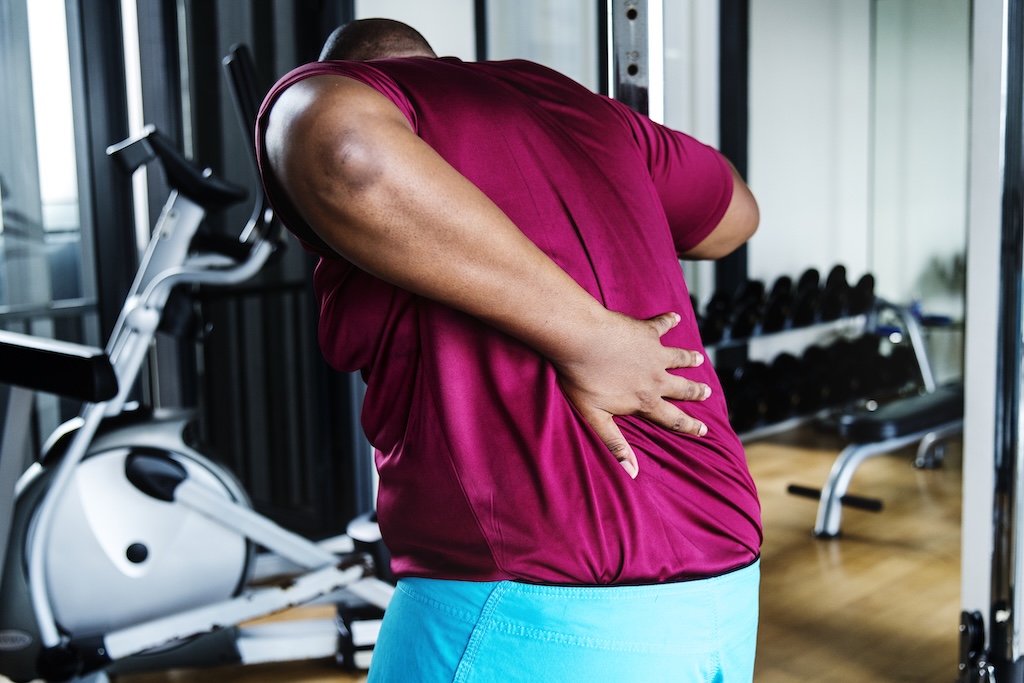
Does your lower back feel sore, stiff, or painful after lifting weights, going to the gym, or exercising?
Lower back pain after working out can happen for several reasons. Muscle strain, a sudden increase in training load, exercise technique, reduced mobility, joint irritation, or an underlying back problem may all contribute.
Some muscle soreness after a challenging workout is normal. However, pain that is sharp, keeps returning after exercise, limits your movement, or travels into your buttock or leg may be a sign that something more than ordinary post-workout soreness is going on.
As an Edmonton chiropractor, I regularly assess active adults with lower back pain related to weight training, gym workouts, running, sports, and other physical activities. Determining why your back hurts is an important first step toward getting back to exercising comfortably.
Is Lower Back Pain After a Workout Normal?
It depends on what the discomfort feels like and how long it lasts.
Delayed-onset muscle soreness (DOMS) commonly develops after unfamiliar or particularly demanding exercise. It often begins several hours after a workout, may be most noticeable the following day, and gradually improves.
Normal muscle soreness usually feels like a dull, generalized ache or stiffness in muscles that were heavily worked.
Back pain from working out may deserve closer attention when it feels sharp or localized, begins suddenly during an exercise, repeatedly occurs with the same movement, restricts your normal activities, or doesn’t improve as expected.
Back pain from working out may deserve closer attention when it feels sharp or localized, begins suddenly during an exercise, repeatedly occurs with the same movement, restricts your normal activities, or doesn’t improve as expected.
Understanding that difference can help determine whether your back simply needs time to recover or whether there may be an injury or mechanical problem contributing to the pain.
What Causes Lower Back Pain After Working Out?
There isn’t one single cause. Several muscles, joints, discs, and nerves can potentially contribute to lower back pain.
Muscle Strain or Overload
A strain of the muscles and connective tissues of the lower back is one of the more straightforward causes of pain after exercise.
This can occur after lifting more weight than you’re accustomed to, performing a new exercise, completing a high-volume workout, or suddenly increasing the intensity of your training.
The muscles may feel tight, tender, or painful with certain movements.
A Sudden Increase in Training Load
Sometimes the problem isn’t a particular exercise – it’s how much you’ve done and how quickly you’ve increased it.
Adding substantially more weight, repetitions, training sessions, running distance, or exercise intensity without enough time for adaptation and recovery can overload tissues that previously tolerated your workouts well.
This is one reason lower back pain can seemingly appear even when you’ve been performing the same exercises for months.
Exercise and Lifting Technique
How you perform an exercise can influence where the load is distributed.
Exercises such as squats, deadlifts, bent-over rows, kettlebell swings, and overhead lifts require coordinated movement through the hips, trunk, and spine.
Technique doesn’t need to look identical for everyone. Body proportions, mobility, previous injuries, training experience, and the exercise itself all matter.
However, if your lower back repeatedly becomes painful during a particular movement, it is worth assessing how you move and how your body is handling the load, rather than simply assuming that exercise is bad for your back.
Reduced Hip or Spinal Mobility
Your lower back doesn’t work in isolation.
Movement during many exercises is shared between the hips, pelvis, thoracic spine, and lower back. If mobility is limited in one area, another region may compensate.
For example, limited hip mobility may change how you squat, hinge, lunge, or perform other lower-body exercises. In some people, this can increase stress on the lower back.
Joint Mobility, Neuromuscular Control, and Movement
Your joints don’t simply allow movement. They also provide continuous sensory information to the nervous system about position, movement, and load. This nerve input (proprioceptive input) helps the brain and nervous system coordinate muscle activity and control movement.
When normal movement through the spine, pelvis, or hips is restricted or painful, sensory input and muscle activation patterns may change. This can affect how efficiently muscles work together to stabilize the trunk and coordinate movements such as squatting, lifting, hinging, running, or twisting.
For example, reduced mobility or altered movement in one area may cause other joints and muscles to take on more of the load. Over time – particularly when combined with fatigue, heavier weights, repetitive training, or a rapid increase in exercise intensity – these compensations may contribute to less efficient movement mechanics and increased stress on the lower back.
This is one reason an assessment of exercise-related back pain should look beyond the painful area itself. Spinal and hip mobility, muscle function, balance, coordination, and overall movement patterns can all provide useful information about factors that may be contributing to the problem.
Joint Irritation
The joints of the lumbar spine can also become irritated during exercise.
Pain may be more noticeable with certain positions or movements, such as extending backward, twisting, bending, or transitioning between positions.
The important point is that the location of your pain alone doesn’t reliably tell us which structure is responsible. An examination can help identify which movements and tissues appear to be contributing.
Can Deadlifts and Squats Cause Lower Back Pain?
They can – but that doesn’t mean squats and deadlifts are inherently bad for your back.
Both exercises can be valuable ways to build strength when appropriately selected, progressed, and performed.
Problems are more likely to develop when the load exceeds your current capacity, fatigue changes how you perform the movement, training volume increases too quickly, or an existing problem becomes aggravated.
If your lower back consistently hurts after deadlifts or squats, simply avoiding those exercises forever isn’t necessarily the answer.
It may be more useful to determine why the movement is provoking your symptoms and whether changes to load, range of motion, technique, exercise selection, mobility, or recovery are appropriate.
Could Lower Back Pain After Exercise Be a Disc Problem?
Sometimes.
The discs between the vertebrae can contribute to lower back pain, and certain disc problems can also irritate nearby spinal nerves.
Symptoms vary considerably. Some people experience primarily lower back pain, while others develop pain, tingling, numbness, or weakness extending into the buttock or leg.
Pain travelling down the leg is commonly referred to as sciatica, although several different conditions can produce leg symptoms.
This is another reason not to diagnose your back problem based solely on where it hurts or what exercise triggered it.
Should I Stop Working Out if My Lower Back Hurts?
Not necessarily.
For mild post-workout soreness, reducing the intensity temporarily and continuing comfortable daily movement may be all that is required.
If a particular exercise causes sharp or increasing pain, however, repeatedly pushing through it isn’t a good strategy. You may need to temporarily modify the weight, range of motion, volume, or exercise itself.
Complete bed rest is generally not the goal for uncomplicated lower back pain. Staying appropriately active is often preferable, provided the activity isn’t significantly worsening your symptoms.
The right approach depends on what is causing the pain and how severe your symptoms are.
When Should I Have Lower Back Pain After Working Out Assessed?
Consider having your back assessed if the pain:
- is sharp or severe rather than ordinary muscle soreness
- repeatedly returns after workouts
- significantly restricts bending, lifting, walking, or other activities
- isn’t gradually improving
- travels into your buttock or leg
- is accompanied by persistent numbness, tingling, or weakness
- is preventing you from returning to your usual workouts or sport
Seek prompt medical attention for back pain associated with significant trauma, progressive weakness, numbness around the groin or saddle region, loss of bowel or bladder control, fever, unexplained weight loss, or other unusual systemic symptoms.
How Can Chiropractic Care Help With Lower Back Pain After Exercise?
Chiropractic assessment can help determine whether your symptoms appear to be related to the muscles, joints, movement patterns, or other structures of the lower back.
At Collins Chiropractic Health & Wellness Centre, an assessment may include examining spinal and hip mobility, nerve and muscle function, and the movements or exercises that provoke your symptoms.
Because joint movement also provides sensory information used by the nervous system to help coordinate movement, assessing how well the spine, pelvis, and hips are moving and functioning together can be an important part of understanding exercise-related back pain.
Treatment depends on what we find.
Chiropractic care may include spinal adjustments, soft-tissue techniques, exercise and rehabilitation recommendations, and advice about modifying activity while your back recovers.
The goal isn’t simply to make the pain disappear temporarily. For active patients, an important part of care is improving joint and muscle function, addressing contributing movement problems, and helping you return to exercise safely and confidently.
Frequently Asked Questions
Lower back pain after lifting weights may result from muscle strain, training overload, joint or disc irritation, reduced mobility, or the way your body is handling a particular movement or load. If the pain repeatedly occurs when lifting, an assessment can help determine what may be contributing.
Mild muscle soreness after squats can be normal, particularly after increasing your training volume or intensity. Sharp pain, pain that begins suddenly during the exercise, or recurring lower back pain after squatting deserves closer attention.
Ordinary post-exercise muscle soreness should gradually settle as the muscles recover. If your pain persists, worsens, repeatedly returns with exercise, or interferes with normal activities, consider having it assessed.
In many cases, some activity can be continued, but the type and intensity may need to be modified. Avoid repeatedly forcing movements that cause sharp or worsening pain. An assessment can help determine which activities are appropriate while you recover.
Seek medical attention if back pain is associated with significant trauma, progressive leg weakness, bowel or bladder changes, saddle-area numbness, fever, unexplained weight loss, or other concerning symptoms.
Get Your Lower Back Pain Assessed in Edmonton
If lower back pain after working out is keeping you from lifting, exercising, playing sports, or doing the activities you enjoy, it may be time to find out what’s causing it.
At Collins Chiropractic Health & Wellness Centre, we provide Back Pain Treatment and Sports Injury Treatment in Edmonton for active adults dealing with lower back pain, gym injuries, and other activity-related problems. We’ll assess what may be contributing to your symptoms and determine whether chiropractic care and rehabilitation are appropriate.
Book an appointment today to have your lower back assessed and get a plan for returning to the activities you enjoy.

About Dr. Dean Collins
Dr. Dean Collins has been helping Edmonton patients improve their health through chiropractic care since 1998. With over 30 years of clinical experience, he has worked with patients of all ages, helping them reduce pain, improve mobility, and maintain healthier, more active lives. At Collins Chiropractic Health & Wellness Centre, Dr. Collins focuses on identifying the underlying causes of pain and dysfunction while providing personalized care, education, and practical strategies to support long-term health and wellness.
Learn more about Dr. Collins or book an appointment today.
Sign up for our Dr. Collins’ newsletters and blog posts
Sign up Dr. Collins’ newsletters to receive vital information on how to keep your spine and nervous system healthy as well as how to help optimize your health and avoid chronic illness.


Leave a Reply