Estimated reading time: 9 minutes
If you’ve hurt yourself running, playing hockey, golfing, working out at the gym, or participating in another sport, you may wonder whether you should rest and see if the injury improves – or have it assessed.
You should consider seeing a chiropractor for a sports injury when pain, stiffness, weakness, reduced movement, or recurring symptoms are interfering with your activity or aren’t improving as expected.
You don’t necessarily have to wait until an injury becomes severe.
Early assessment can help determine what you’ve injured, whether chiropractic care and rehabilitation are appropriate, and what you can safely do while recovering.
What Sports Injuries Can a Chiropractor Assess?
Sports injuries aren’t limited to competitive athletes.
Runners, golfers, hockey players, gym-goers, recreational athletes, and active adults can all develop injuries involving muscles, joints, tendons, ligaments, and other parts of the musculoskeletal system.
A sports injury chiropractor may assess problems such as:
- Back and neck injuries
- Muscle strains
- Joint sprains
- Shoulder pain
- Hip and groin pain
- Knee pain
- Foot and ankle injuries
- Ankle sprains
- Tennis or golfer’s elbow
- Running-related injuries
- Golf-related injuries
- Gym and weight-training injuries
- Repetitive strain and overuse problems
The important first step is determining what appears to be causing your symptoms.
Not every sports injury should be treated the same way, and not every sports injury is appropriate for chiropractic treatment.
Signs It’s Time to Have Your Sports Injury Assessed
Some minor aches and pains settle fairly quickly when you temporarily modify the activity that irritated them.
Other problems deserve a closer look.
Consider having your injury assessed if:
- Pain isn’t improving or continues to get worse
- Pain returns whenever you resume your sport
- You have noticeable weakness
- A joint feels unstable or repeatedly gives way
- Swelling persists or keeps returning
- You’ve lost mobility or range of motion
- Your normal movement has changed because of the injury
- You can’t comfortably run, lift, throw, swing, skate, or perform other usual movements
- You’ve had the same injury more than once
- You’re unsure whether it’s safe to return to your activity
You may also want an assessment when an injury seems minor but simply isn’t progressing the way you expected.
Persistent symptoms can sometimes be a sign that the injured area hasn’t fully recovered or that other factors are affecting how you move.
What About an Injury That Only Hurts During Sports?
Pain doesn’t have to interfere with everyday life before it’s worth investigating.
Perhaps your knee feels fine while walking but hurts every time you run. Your shoulder may only bother you while bench pressing or serving a tennis ball. Your back might feel comfortable throughout the week but repeatedly become painful after golfing.
These patterns can provide useful information.
Sport places greater demands on your body than many everyday activities. Problems involving strength, mobility, stability, flexibility, coordination, or your ability to tolerate repeated loading may therefore become noticeable during sport before they affect normal daily activities.
Repeatedly pushing through the same pain isn’t always the best solution.
An assessment can help determine why the activity is provoking your symptoms and what may need to change before you return to it comfortably.
What If the Injury Happened Weeks or Months Ago?
You can still have a sports injury assessed even if it isn’t new.
Some injuries never fully settle after the original incident. Others improve enough that you return to activity but then repeatedly flare up.
For example, an ankle may continue to feel unstable after a previous sprain. Knee pain may return every time your running mileage increases. A shoulder injury may improve with rest but hurt again once you resume lifting.
In these situations, simply waiting longer may not address the factors contributing to the recurring problem.
Your assessment may include looking at joint mobility, nerve and muscle function, strength, flexibility, balance, movement control, and the specific demands of your activity.
When Should a Sports Injury Receive Medical Attention First?
Some sports injuries require urgent medical assessment rather than chiropractic treatment.
Seek appropriate medical attention following a significant injury if you have symptoms such as:
- An obvious deformity
- Inability to move or put weight through an injured joint
- Severe or rapidly increasing swelling
- Significant pain directly over a bone following trauma
- New numbness or significant weakness
- A joint that locks and cannot move normally
- Severe pain following a significant fall or collision
- Signs or symptoms of a concussion or other head injury
- Symptoms that are rapidly worsening
A sudden pop followed by substantial swelling, instability, or inability to continue an activity may also indicate a more significant injury that requires prompt assessment.
If your examination suggests a fracture, significant ligament or tendon injury, concussion, or another problem requiring imaging or medical evaluation, you should be referred for the appropriate care
How Can Chiropractic Care Help with a Sports Injury?
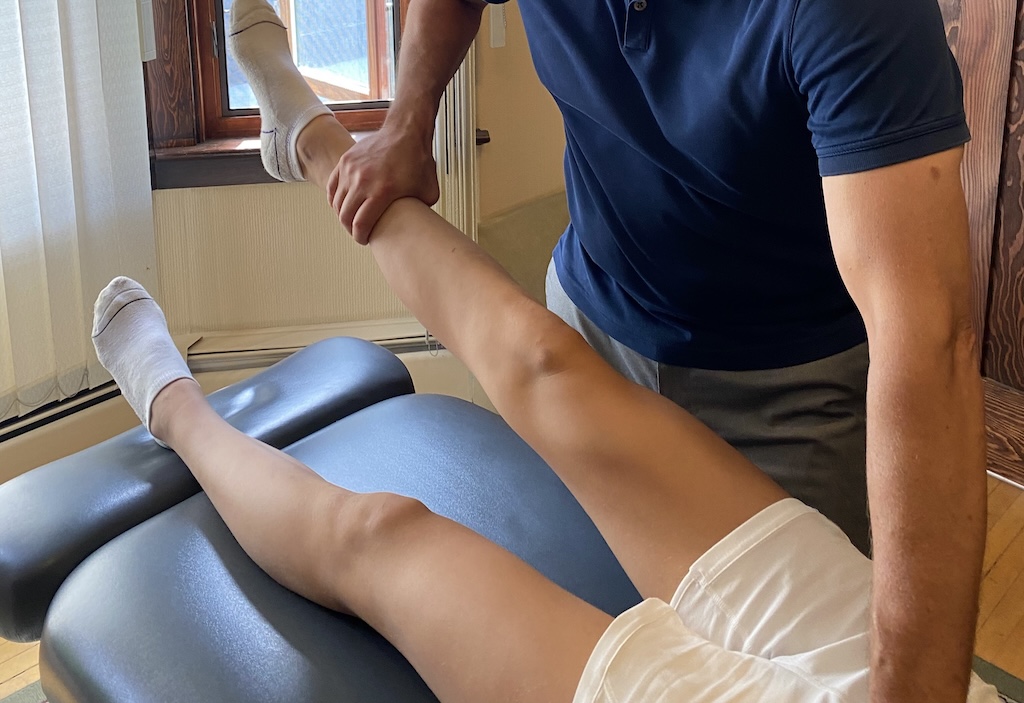
Chiropractic care for sports injuries involves more than simply adjusting the area that hurts.
Treatment should begin with understanding the injury and how it is affecting your movement and function.
Depending on your condition and examination findings, treatment may include:
- Chiropractic adjustments or joint mobilization
- Soft tissue therapy
- Mobility and flexibility exercises
- Strengthening exercises
- Balance and coordination training
- Movement and stability exercises
- Activity modification
- Advice about gradually returning to your sport
- Home exercises and rehabilitation
Your treatment should be tailored to both the injury and what you want to get back to doing.
The physical demands placed on a runner are different from those placed on a golfer, hockey player, weightlifter, or someone who simply wants to remain active.
Further, regular chiropractic care can help improve your performance in your chosen sport.
Do You Have to Stop Exercising While Recovering?
Not necessarily.
Depending on the injury, completely stopping all physical activity may not be required.
Sometimes the better approach is to temporarily reduce or modify the activity that aggravates the injury while continuing movements and exercises you can perform comfortably.
As the injured area recovers, activity can often be progressively reintroduced.
The goal is to find the appropriate balance between allowing irritated or injured tissues to recover and gradually restoring the strength, mobility, coordination, and tolerance required for your activity.
Trying to return too quickly can aggravate some injuries and delay recovery.
When Can You Return to Your Sport?
There isn’t one timetable that applies to every sports injury.
Returning to activity depends on the type and severity of the injury, your symptoms, how well you’ve recovered, and the demands of your particular sport.
Before returning fully, we may look at factors such as:
- Pain and tenderness
- Joint mobility
- Strength
- Flexibility
- Balance and coordination
- Stability
- Movement control
- Ability to perform sport-specific movements
Returning to sport should often be a progression rather than an immediate jump from resting to performing at your previous level.
For a runner, that might mean gradually increasing distance and pace. A golfer may progressively return from putting and shorter swings to playing a full round. Someone returning to the gym may initially reduce weight, repetitions, or range of motion before gradually rebuilding their normal training.
The goal isn’t simply to get you back as quickly as possible. It’s to help you return safely and confidently with the function you need for the activity you enjoy.
Sports Injury Treatment in Edmonton
At Collins Chiropractic Health & Wellness Centre, we treat competitive athletes, recreational athletes, weekend warriors, and active adults who want to keep doing the activities they enjoy.
Whether your injury happened suddenly or developed gradually through repetitive activity, the first step is determining what has been injured and what may be contributing to the problem.
From there, we can determine whether chiropractic treatment and rehabilitation are appropriate and develop a plan based on your injury, activity, and goals.
Frequently Asked Questions
It depends on the injury. Minor aches may improve with temporary activity modification and self-care. If pain is significant, movement is restricted, symptoms are getting worse, or the injury isn’t improving as expected, it’s worth having it assessed.
Significant trauma or symptoms suggesting a fracture, concussion, or serious ligament or tendon injury may require medical assessment first.
A chiropractor can assess many neuromusculoskeletal sports injuries and determine whether the findings are consistent with a condition that can be managed conservatively. If the examination raises concern about a fracture, significant tissue injury, neurological problem, concussion, or another condition requiring additional investigation, you may be referred for imaging or medical assessment.
Yes, it can still be worth assessing. An injury may become noticeable only when your body is exposed to the greater demands of running, lifting, jumping, throwing, golfing, or another activity. Recurring pain during the same movement can be a reason to determine what is contributing to the problem.
Depending on the condition, chiropractic care and rehabilitation may help with persistent pain, reduced mobility, weakness, instability, or movement problems following an older injury. An assessment can help determine whether the previous injury may still be affecting your current function.
Returning to sport may involve restoring mobility, strength, flexibility, balance, coordination, and movement control before gradually rebuilding your normal activity. Your rehabilitation should reflect the demands of the sport or activity you’re returning to.
Still Struggling with a Sports Injury?
If pain, stiffness, weakness, or a recurring injury is keeping you from running, golfing, working out, playing sports, or enjoying the activities that matter to you, it may be time to have it properly assessed.
Learn more about our Sports Injury Treatment in Edmonton, or book an appointment with Dr. Collins for a thorough assessment and personalized treatment and rehabilitation plan.

About Dr. Dean Collins
Dr. Dean Collins has been helping Edmonton patients improve their health through chiropractic care since 1998. With over 30 years of clinical experience, he has worked with patients of all ages, helping them reduce pain, improve mobility, and maintain healthier, more active lives. At Collins Chiropractic Health & Wellness Centre, Dr. Collins focuses on identifying the underlying causes of pain and dysfunction while providing personalized care, education, and practical strategies to support long-term health and wellness.
Learn more about Dr. Collins or book an appointment today.
To learn more about how chiropractor care can help you and your family, read Dr. Collins’ comprehensive guide to chiropractic care: Chiropractic Care for Everyone.
Sign up for our Dr. Collins’ newsletters and blog posts
Sign up Dr. Collins’ newsletters to receive vital information on how to keep your spine and nervous system healthy as well as how to help optimize your health and avoid chronic illness.


Leave a Reply