
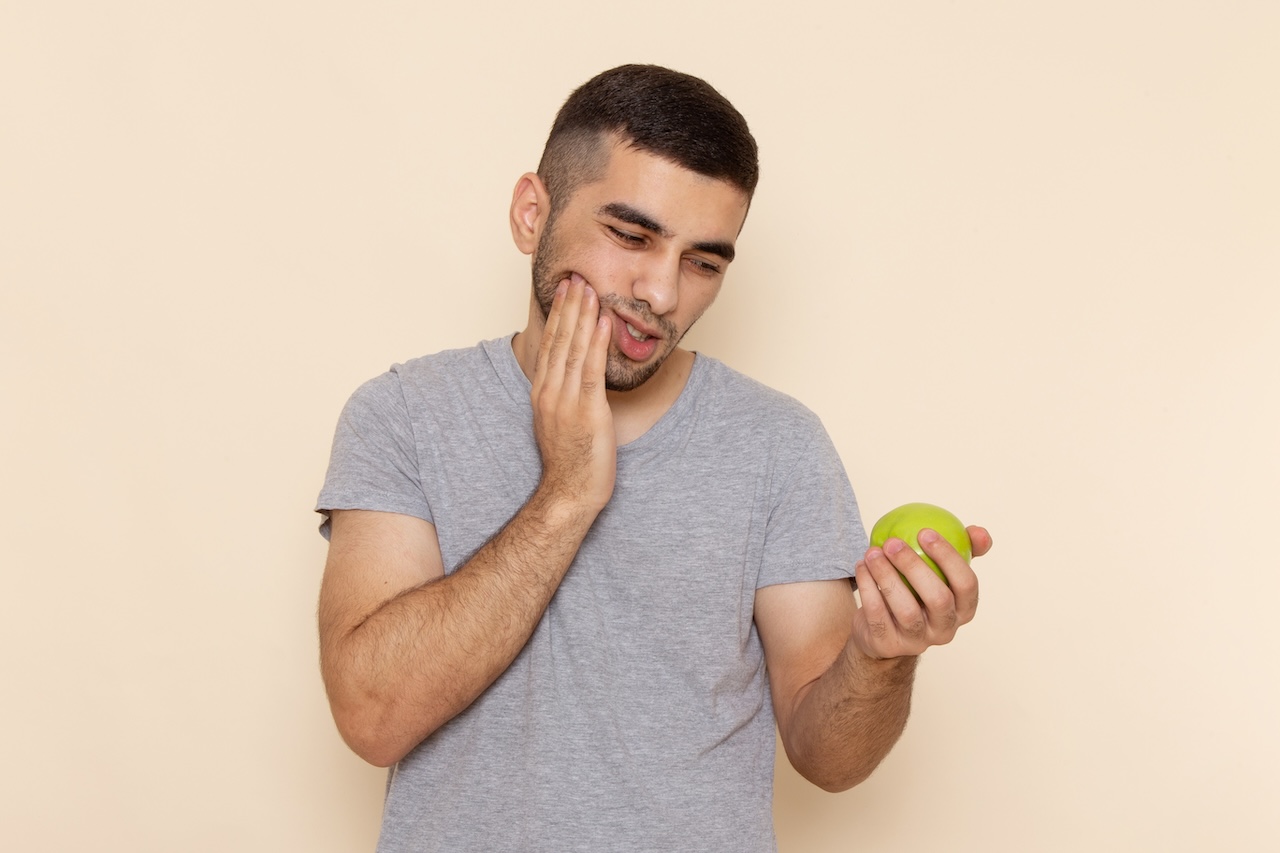
If your jaw hurts when you chew, the problem may involve the temporomandibular joint (TMJ), the muscles that control your jaw, or another dental or musculoskeletal condition.
Pain with chewing is a common symptom of temporomandibular disorders (TMD), but not all jaw pain comes from the TMJ.
The location of your pain, how your jaw moves, what triggers the symptoms, and whether you also have clicking, stiffness, headaches, tooth pain, or neck symptoms can all provide important clues.
Why Does Chewing Make My Jaw Hurt?
Chewing requires repeated, coordinated movement of both temporomandibular joints and the muscles controlling the jaw.
If one of these structures is irritated or not functioning comfortably, repeatedly loading it while eating can provoke symptoms.
That’s why some people notice very little discomfort when their jaw is resting but develop pain as soon as they start eating.
Hard, chewy, or crunchy foods may be particularly aggravating because they require greater force and more repetitive jaw movement.
Common Causes of Jaw Pain When Chewing
There are several possible causes.
Temporomandibular Disorders
TMD is a broad term covering more than 30 conditions affecting the jaw joints, chewing muscles, and associated structures.
Symptoms may include:
- Jaw pain
- Pain while chewing
- Jaw stiffness
- Painful clicking or popping
- Limited movement
- Jaw locking
- Facial pain
- Headaches
- Associated neck discomfort
The pain may occur on one side or both.
Tight or Overworked Jaw Muscles
Your chewing muscles work throughout the day when you eat and talk.
Clenching, grinding, stress-related jaw tension, excessive gum chewing, or other repetitive habits may overwork these muscles.
Once irritated, even ordinary chewing can become uncomfortable.
Teeth Grinding and Clenching
Bruxism refers to grinding or clenching the teeth.
Some people clench while awake, while others grind their teeth during sleep.
Signs that clenching or grinding may be involved can include morning jaw stiffness, tender chewing muscles, worn teeth, headaches, or jaw fatigue.
TMJ Joint Problems
The joint itself can also become painful.
Changes involving joint movement, the articular disc, inflammation, arthritis, or previous injury may cause discomfort when the jaw is loaded during chewing.
Dental Problems
This is an important one.
Not every painful jaw is a musculoskeletal problem.
Tooth decay, cracked teeth, dental infections, gum problems, and other dental conditions can produce pain that someone interprets as coming from the jaw.
If your symptoms seem localized to a tooth, are associated with hot or cold sensitivity, swelling, or other dental symptoms, a dental assessment may be appropriate.
Previous Injury
A sports injury, fall, motor vehicle collision, or blow to the jaw may affect the TMJ or surrounding tissues.
Always mention previous trauma during an assessment, even if it occurred some time before your current symptoms developed.
Why Does My Jaw Hurt on Just One Side When I Chew?
Jaw pain doesn’t have to affect both sides equally.
One-sided pain can occur when a joint, muscle, tooth, or other structure on one side is irritated.
People also don’t necessarily chew equally on both sides.
Sometimes patients begin favouring one side because the other is uncomfortable, which can further change how the jaw muscles and joints are being loaded.
Rather than assuming that one-sided jaw pain identifies a particular diagnosis, it’s better to determine which structures reproduce the symptoms during an examination.
What If My Jaw Also Clicks When I Eat?
Clicking or popping can occur with TMD, but the sound itself isn’t necessarily a problem.
Painless clicking is common.
I’m more interested when jaw clicking while chewing is accompanied by pain, stiffness, catching, locking, or restricted movement.
Those additional symptoms provide more reason to assess how the joint and surrounding muscles are functioning.
Can Neck Problems Contribute to Jaw Pain?
The neck doesn’t cause every case of jaw pain, but there can be an important relationship between the two areas.
The cervical spine, muscles of the neck, jaw muscles, and head all contribute to coordinated movement and posture.
Some people with TMD also experience neck pain or headaches.
For that reason, when someone comes to our Edmonton chiropractic clinic with persistent jaw pain, I may assess the cervical spine and surrounding muscles as well as the jaw itself.
The goal is to identify relevant contributing factors rather than assuming that all jaw pain originates from one structure.
What Can I Do If My Jaw Hurts While Eating?
For mild symptoms, temporarily reducing stress on the jaw may help.
Consider:
- Choosing softer foods for a short period
- Cutting food into smaller pieces
- Avoiding excessive gum chewing
- Avoiding very hard or chewy foods temporarily
- Being conscious of daytime clenching
- Avoiding repeatedly opening your mouth extremely wide
- Using gentle jaw movement rather than deliberately forcing or “popping” the joint
These measures may help settle an irritated area, but persistent pain deserves further assessment.
When Should I Get Jaw Pain Checked?
Consider having your jaw assessed if:
- Pain persists or keeps returning
- Chewing is becoming increasingly uncomfortable
- Your jaw movement is becoming restricted
- The jaw catches or locks
- Clicking or popping has become painful
- You have associated headaches or neck pain
- Symptoms followed an injury
- The problem is interfering with eating or everyday activities
Sudden severe pain, significant swelling, fever, major trauma, inability to open or close the jaw normally, or symptoms suggesting a dental infection require prompt appropriate medical or dental care.
How Can Chiropractic Care Help with Jaw Pain?
When jaw pain has a musculoskeletal component, conservative treatment may help improve movement and reduce irritation.
At Collins Chiropractic Health & Wellness Centre in Edmonton, treatment is based on the examination findings and may include:
- Assessment of TMJ movement
- Soft tissue therapy for tight or tender chewing muscles
- Assessment and treatment of associated neck dysfunction
- Chiropractic adjustments when appropriate
- Jaw mobility and control exercises
- Postural recommendations
- Home exercises and self-care strategies
Current evidence for chronic TMD pain supports several conservative approaches, including mobilization, manual trigger-point therapy, supervised jaw exercise, stretching, and postural exercise.
And importantly, if your examination suggests that the problem may be dental or requires another type of assessment, referral or collaborative care may be recommended.
Frequently Asked Questions
Hard or chewy foods require greater force from the chewing muscles and place more demand on the temporomandibular joints. If the muscles or joints are already irritated, those foods may make symptoms more noticeable.
One-sided jaw pain may originate from a TMJ, chewing muscle, tooth, or another structure. An examination can help determine where the pain is coming from.
Stress itself isn’t necessarily the direct cause, but some people respond to stress by tightening or clenching their jaw. Repeated clenching can overload the chewing muscles and may contribute to pain.
You don’t necessarily need to completely avoid one side unless you’ve been advised to do so. Temporarily choosing softer foods and avoiding particularly hard or chewy foods may be more useful while an irritated jaw settles.
If the pain involves TMJ movement, chewing muscles, associated neck dysfunction, or other musculoskeletal factors, conservative chiropractic care may be appropriate. Dental and other causes should be considered when indicated.
Is Jaw Pain Making It Difficult to Eat Comfortably?
If jaw pain is making eating, talking, yawning, or everyday activities uncomfortable, we can help determine what may be contributing to the problem. Learn more about our TMJ Pain Treatment in Edmonton, or book an appointment with Dr. Collins for a thorough assessment and personalized treatment plan.

About Dr. Dean Collins
Dr. Dean Collins has been helping Edmonton patients improve their health through chiropractic care since 1998. With over 30 years of clinical experience, he has worked with patients of all ages, helping them reduce pain, improve mobility, and maintain healthier, more active lives. At Collins Chiropractic Health & Wellness Centre, Dr. Collins focuses on identifying the underlying causes of pain and dysfunction while providing personalized care, education, and practical strategies to support long-term health and wellness.
Learn more about Dr. Collins or book an appointment today.
To learn more about how chiropractor care can help you and your family, read Dr. Collins’ comprehensive guide to chiropractic care: Chiropractic Care for Everyone.
Sign up for our Dr. Collins’ newsletters and blog posts
Sign up Dr. Collins’ newsletters to receive vital information on how to keep your spine and nervous system healthy as well as how to help optimize your health and avoid chronic illness.


Leave a Reply